
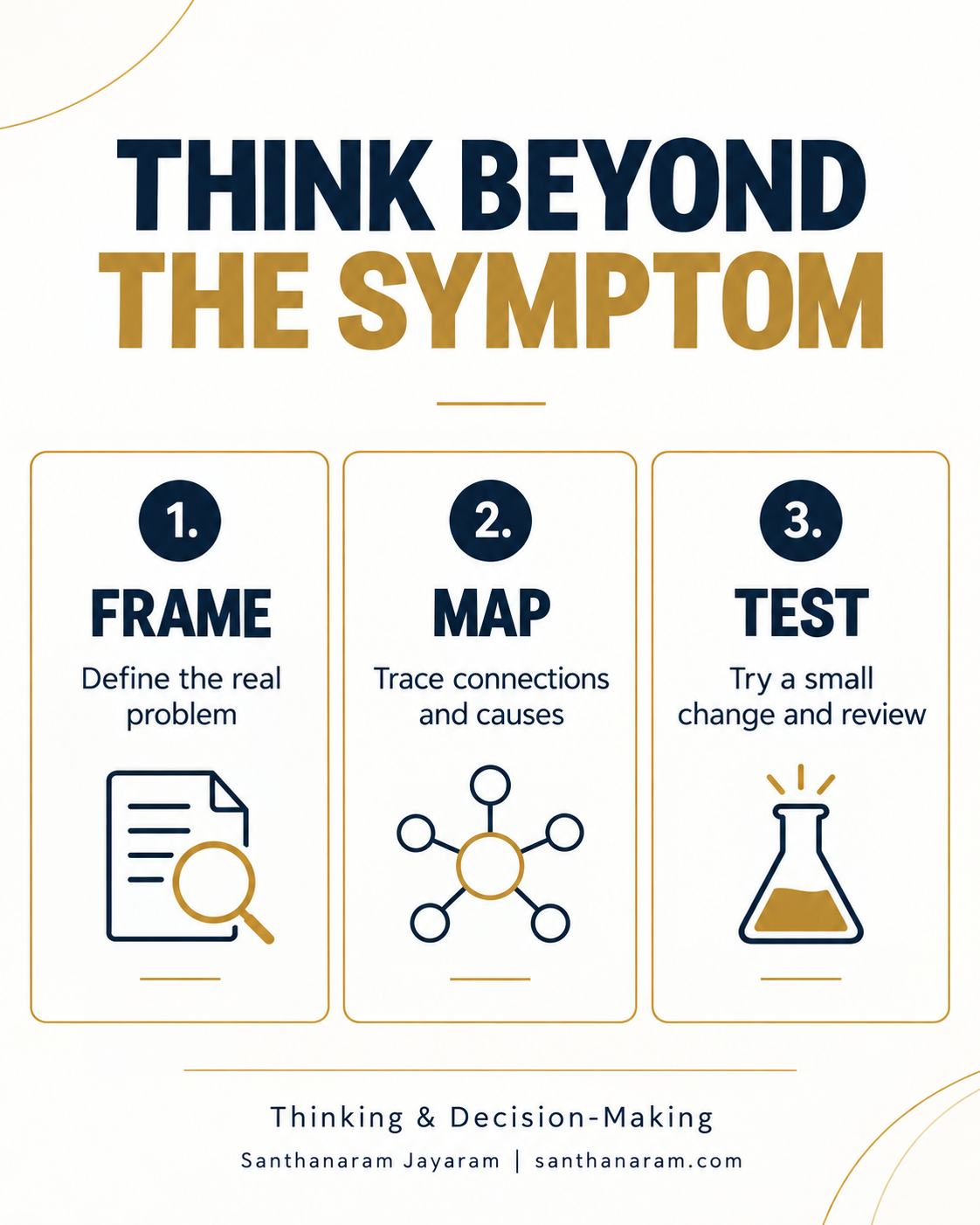
Think Beyond the Symptom: A Practical Start to Systems Thinking
Frame the real problem, map connections and test a small change. A practical introduction to the Systems Thinking and Critical Thinking workshops.
Thinking & Decision-Making
When the same workplace problem returns, another reminder may not be enough. Imagine a team that misses a deadline every month despite working late. This illustrative example invites a better question: what in the system keeps producing the delay?
1. Frame the real problem
Describe what is happening without jumping to blame or a preferred solution. “Reports arrive late” is more useful than “People are careless”. Define the pattern, its impact and the people affected.
2. Map connections and causes
Trace the handovers, decisions, information and dependencies involved. Ask what happens before the delay and what happens afterwards. Compare perspectives across functions. Treat your first explanation as a hypothesis to test.
3. Test a small change
Choose a manageable intervention, agree what evidence you will collect and set a review date. Check for unintended consequences as well as improvement.
Try this at work
Draw a simple map of one recurring problem. Mark the places where work waits, information is missing or decisions repeat. Ask a colleague from another function what your map leaves out.
Build your thinking toolkit
Related courses: Systems Thinking Workshop: Finding Solutions for Wicked Problems; Displaying Critical Thinking and Analytical Skills.
Explore Thinking & Decision-Making workshops →
Discuss a workshop for your team →